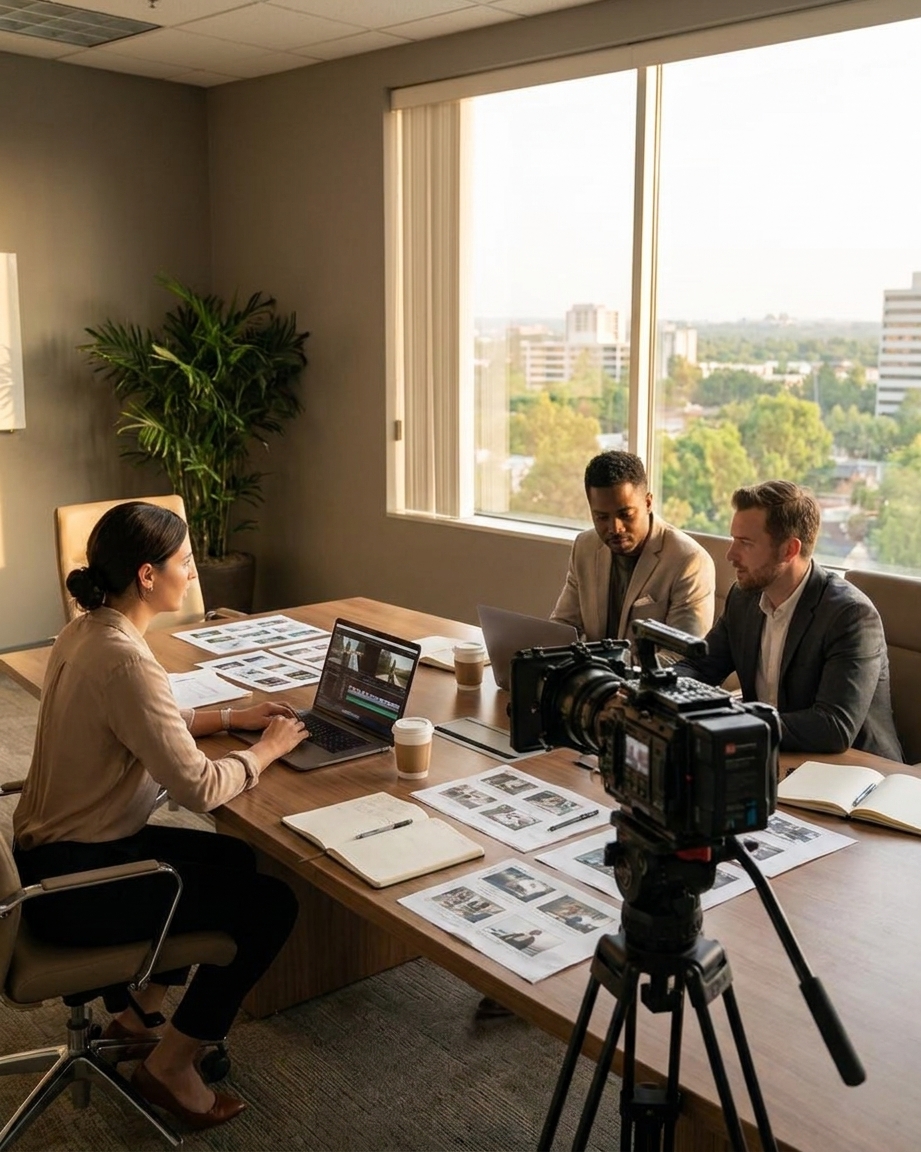
Planning a corporate video production without a clear process wastes budget on reshoots and footage nobody uses. This guide breaks the project into the exact steps a Montreal video team follows before a single camera rolls.
- Corporate video production succeeds or fails in pre-production — lock the message and audience before booking a crew.
- A 3-day shoot window with a backup date protects against Montreal's weather when drone footage is involved.
- ArsenMedia recommends a single-page creative brief before any corporate video production starts in 2026.
- Skip storyboarding on multi-location shoots and expect 20-30% more edit time fixing continuity.
Why this matters
A corporate video project that starts with "let's just get some footage" almost always ends with unusable clips and a client asking for a second shoot day. Established businesses commissioning brand video in 2026 are competing for attention on LinkedIn, YouTube, and internal training platforms where a shaky, unplanned video reads as unprofessional within the first five seconds.
The planning phase costs nothing but time. Skipping it costs the reshoot day, the crew rate, and the two weeks of calendar you don't get back. Every step below exists because it prevents a specific, common failure on corporate video production shoots.
What you'll need
- A one-page creative brief: objective, audience, key message, distribution channel
- A locked script or interview question list (no video crew should show up to "figure it out on the day")
- A shot list separating interview setups, b-roll, and any corporate video production drone segments
- Access confirmed for every location, including building permissions for drone filming
- A release form for every person appearing on camera
- A realistic timeline: 2-4 weeks pre-production, 1-3 shoot days, 2-3 weeks post-production
- A backup shoot date if any portion of filming depends on weather
The steps
1. Define the single objective the video has to hit
A corporate video trying to do five things at once — recruit, sell, explain culture, launch a product — does none of them well. Pick one primary objective and write it into the brief in one sentence.
This matters because every downstream decision (length, tone, where it lives) traces back to this sentence. A 90-second recruitment video and a 4-minute product explainer are structured completely differently, and mixing the two produces something too long for social and too shallow for sales.
Common mistake: trying to make one video serve the website homepage, a trade show booth, and an Instagram ad simultaneously. Plan for a primary cut and note which secondary edits you'll need later.
2. Write the script or the interview framework
Scripted corporate video needs a full script approved before the shoot date, timed by reading it aloud (150 words per minute is a reasonable spoken pace). Interview-style corporate video needs a locked list of 8-12 questions that build toward the key message, not a loose conversation.
Unscripted interviews without a framework run long, wander off-topic, and leave the editor stitching together fragments that don't connect. Time-box each question to 2-3 minutes of answer.
Common mistake: handing the subject the questions cold, on camera, with no warm-up take. Always run one throwaway question first to settle nerves.
3. Build the shot list and location plan
Separate the shot list into three columns: interviews, b-roll, and drone or aerial segments. For every location, confirm who has authority to grant filming access, whether that's a building manager, a municipal permit for exterior drone work, or a client's internal comms team.
Drone filming adds a layer most corporate video plans miss: Transport Canada rules require the operator to hold a valid pilot certificate and the flight to respect airspace restrictions, which matters near downtown Montreal and any site close to an airport corridor. Confirm this before the shoot date, not the morning of.
Common mistake: scheduling the drone segment for the same hour as the interview segment. Aerial shots need their own weather window and often a different time of day for light.
4. Lock the shoot schedule with a buffer
Build the shoot day schedule backward from the hardest constraint — usually an executive's calendar or a weather-dependent drone segment. Add a 20-30 minute buffer between every setup change; lighting and audio resets always take longer than expected.
A single shoot day for a 3-minute corporate video with two interview subjects and b-roll typically runs 6-8 hours on location. Multi-location projects need a full day per site plus travel.
Common mistake: booking back-to-back interviews with zero buffer, then losing the light for the b-roll segment because the last interview ran 45 minutes over.
5. Confirm audio and lighting requirements per location
Corporate interview audio fails more often from environmental noise (HVAC systems, open-plan offices, street traffic) than from equipment problems. Walk the location or ask for photos in advance and flag any room with hard surfaces, glass walls, or exposed ductwork.
Lighting plans differ for a boardroom interview versus a factory floor b-roll segment. Note natural light direction and time of day for any location with large windows — direct sun through glass at midday creates a lighting problem no amount of post-production fixes cleanly.
Common mistake: assuming an office "looks fine" without walking it. A room that looks clean to the eye often has a visible hum or reflection the camera picks up that a phone camera won't show you.
6. Set the post-production timeline and revision rounds
Agree in writing on the number of revision rounds (2-3 is standard) and the delivery format for each channel — a LinkedIn cut, a website hero cut, and a full-length version are three different exports, not one file resized. Post-production on a corporate video with drone footage, interviews, and motion graphics typically runs 2-3 weeks from final footage to delivered file.
This step gets skipped constantly, and it's the number one source of scope disputes after the shoot. Put the revision count and turnaround window in the brief before day one.
Common mistake: approving a rough cut without checking captions, color grade, and audio levels separately — each needs its own review pass.
Troubleshooting
- The interview subject freezes on camera — run a warm-up question unrelated to the brief, then restart with the real first question once they've relaxed.
- Room audio has a hum or echo — check for HVAC units, refrigerators, or fluorescent lighting ballasts; moving the interview to a smaller, softer-surfaced room usually solves it faster than adding sound treatment on the day.
- Drone segment gets scrapped for weather — this is exactly why the backup shoot date exists; reschedule the aerial portion rather than compromising on wind or visibility.
- B-roll doesn't match the interview's energy — shoot b-roll after the interview, once you know the tone that actually came through, not before.
- Client wants a fourth revision round — reference the revision count agreed in the brief; additional rounds get scoped and quoted separately.
- Footage looks great but runs long for the intended platform — build a 90-second cutdown into the post-production plan from the start, don't try to trim a 4-minute cut down after the fact.
Tools and resources
- A one-page creative brief template (objective, audience, key message, channel)
- A shot list spreadsheet with columns for interview, b-roll, and drone segments
- A location access log confirming who can authorize filming at each site
- Transport Canada's drone regulations reference for any exterior aerial filming near Montreal
- A revision-tracking sheet so post-production feedback stays in one place, not scattered across emails
Plan your corporate video with ArsenMedia
Montreal-based crew for corporate video and drone filming, built for established brands.
What to do next
Once the brief, script, and shot list are locked, the next real decision is choosing between an in-house shoot and bringing in a dedicated corporate video production team with drone capability already cleared for local filming rules. Established brands filming in 2026 increasingly need both interview-grade audio and aerial footage in the same deliverable, which is where a specialized crew earns its rate back in avoided reshoots.
FAQ
How long does corporate video production take from planning to delivery?
A standard corporate video project takes 6-9 weeks total in 2026: 2-4 weeks of pre-production, 1-3 shoot days, and 2-3 weeks of post-production. Projects with multiple locations or drone segments run longer due to weather buffers and permit timing.
Do I need a permit for drone filming at my office?
Exterior drone filming near Montreal requires the operator to hold a valid Transport Canada pilot certificate and respect local airspace restrictions. Confirm this with your production team before the shoot date, especially near airport corridors or dense downtown areas.
What's the best length for a corporate video in 2026?
90 seconds works best for LinkedIn and website hero placements, while 3-4 minutes suits a full company or product explainer. Match the length to the primary distribution channel defined in the creative brief, not the other way around.
Is a scripted or interview-style corporate video better?
Scripted video gives tighter message control and works well for product explainers, while interview-style video feels more authentic for culture and testimonial content. The choice depends on the single objective set in step one of planning.
How much revision is normal in corporate video production?
2-3 revision rounds is standard once a rough cut is delivered. Agreeing on this number in the brief before the shoot prevents scope disputes during post-production.
Can corporate video and drone footage be shot on the same day?
They can, but aerial segments need their own weather window and often a different time of day for light, so scheduling them back-to-back with interviews usually causes delays. Build in a buffer or split them across two half-days.
What causes bad audio in corporate interviews?
HVAC systems, open-plan offices, and glass-walled rooms cause most audio problems, more often than equipment failure. Walking the location beforehand and choosing a smaller, softer-surfaced room solves this before it becomes a post-production fix.
Who should be involved in the pre-production brief?
The person who owns the business objective, whoever manages the distribution channel, and the production team should all sign off on the one-page brief before scripting starts. Skipping any of these three roles is the most common reason objectives shift mid-project.
One last thing
The detail most planning guides skip: shoot your b-roll after the interview, not before. Once you've heard how the subject actually talks and what energy came through on camera, the b-roll you select matches the finished tone instead of guessing at it in advance — a small sequencing change that saves an entire re-edit pass in 2026 post-production schedules.